A Four-Game Preseason Changes How Every Camp Body Gets Managed

The new CBA caps exhibition schedules at four games. Fewer live auditions, a longer regular season and tighter LTIR rules all pull in the same direction.
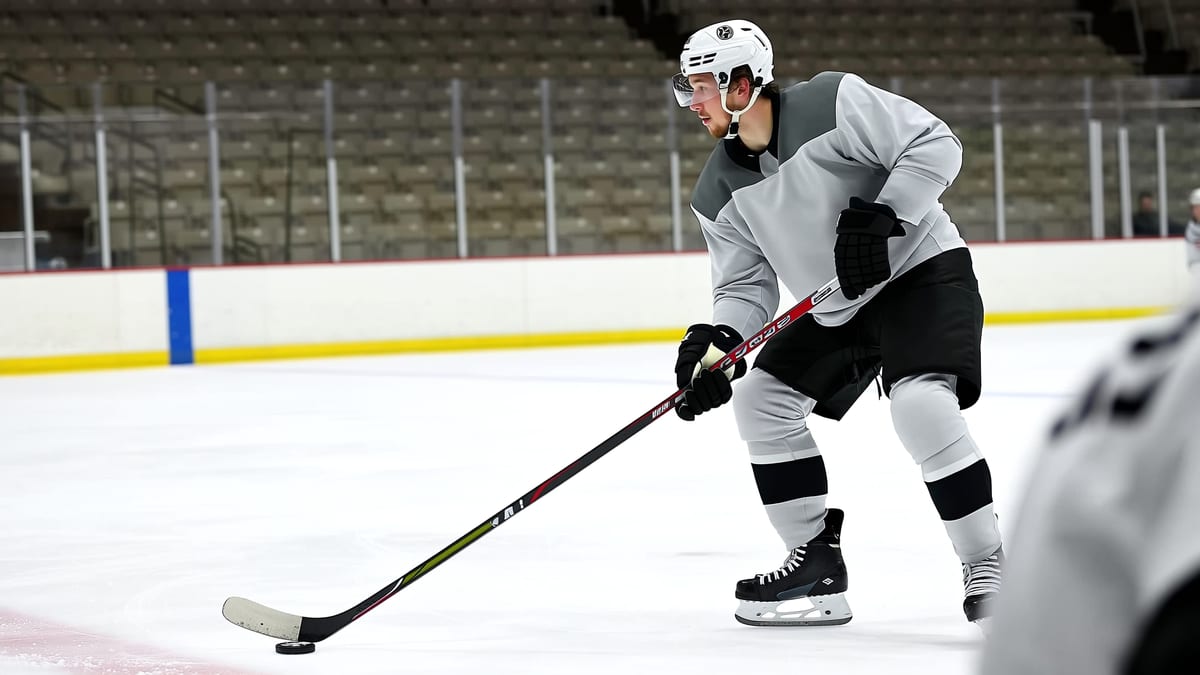
The collective bargaining agreement that takes effect Sept. 16 reduces the preseason to a maximum of four games. That is a smaller headline than the contract-term cut or the long-term injured reserve changes, and over a full season it may matter more to how teams handle injuries than either of them.
Less runway, more season
The regular season is 84 games for the first time since 1993-94 (42 home, 42 road, 1,344 games across 194 days), beginning Sept. 29 on the earliest opening night since that same year.
So the calendar has been pushed at both ends: two more games of real hockey, and roughly half the exhibition schedule clubs used to get. A player working back from surgery now has four opportunities to prove fitness in game conditions instead of six or seven, and those four are shared across an entire roster that also needs to be evaluated.
The clubs feeling this most acutely are the ones with genuine questions to answer in September. Vancouver has no firm return date on Thatcher Demko, whose hip surgery was Jan. 27 and whose three-year, $25.5 million extension begins this season. Chicago is without Connor Bedard until roughly the first or second week of November after July shoulder surgery. Carolina is waiting on Seth Jarvis, whose shoulder repair was announced June 27 with a four-to-six-month recovery from late June. Columbus just lost Elvis Merzlikins to a shoulder procedure with no timeline attached.
None of those clubs will get a meaningful look at the player in question before opening night. Some of them would not have anyway.
The incentive now runs toward caution
There is a second-order effect worth naming. When a team had seven exhibition games it could afford to use two of them on a marginal fitness test. With four, every one of them has to do roster evaluation work, which means a borderline body is likelier to be held out entirely and assessed in practice.
That is medically the right instinct and competitively an awkward one, because the alternative to a preseason game is a regular-season game that counts.
The LTIR change pushes the same way
The new agreement caps LTIR relief for a player expected to return at roughly $3.82 million (the previous season’s league average salary), regardless of his actual cap hit. Full relief against the real number requires the club to declare him out for the entire regular season and playoffs.
Combine that with a four-game preseason and the September decision gets harder. A club that rushes a player back, discovers in October that he is not right, and then needs cap relief is now recovering a fraction of what it used to. A club that writes him off in September gets the full relief but loses him for the year, including the playoffs, where lineups must now be cap-compliant per game, 18 skaters and two goaltenders, submitted by 3 p.m. local time or five hours before puck drop.
What to watch in September
Not who plays in the exhibition games. Who does not.
With only four dates available, the players held out are the ones carrying real uncertainty, and the absence itself is now a stronger signal than it used to be. Reading a camp this year means reading the list of names that never appear in it.
Odds and market references describe the situation at the time of writing. You must meet the legal gambling age in your province or territory. See responsible gambling.